
Costa Rica / Puerto Viejo / Is it safe?
Puerto Viejo · Know before you go
Is Puerto Viejo safe?
Mostly yes, with two risks worth taking seriously: petty theft and rip currents. Here is what official advice says, and the habits that cover most of it.
Safe enough, with a few habits
Puerto Viejo is a small, busy beach town. The risks are the ordinary ones of a popular coast: things go missing, and the sea can be stronger than it looks.
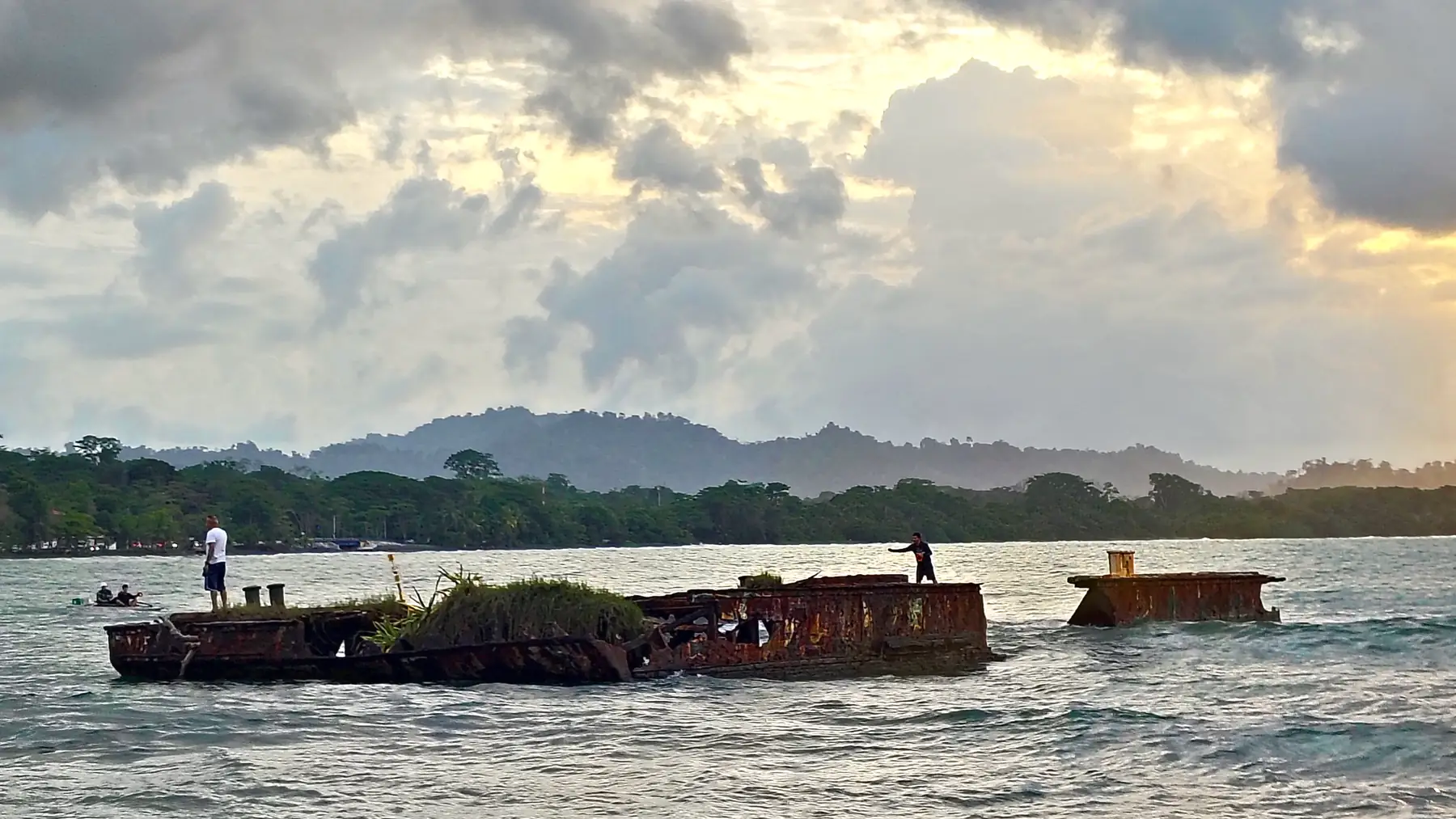
What to know, and what to do
TheftThe common problem, and mostly avoidable
Canada’s travel advice describes pickpocketing and bag snatching as frequent in Costa Rica and names Puerto Limón, Cahuita and Puerto Viejo for theft. The usual pattern is opportunistic: a bag left on the sand while you swim, a bike left unlocked, a phone on a restaurant table. The same advice describes thieves working in pairs around tourist areas, transport hubs and waterfront restaurants, and notes that passport theft is common in busy periods.
- Lock rental bikes by the frame at every stop, even for a minute.
- Take only what you need to the beach and keep it in sight, or leave valuables at the hotel.
- Do not leave anything visible in a parked car, anywhere on the coast.
- Keep your passport in the hotel safe if there is one, and carry a photo or a copy.
- Carry small amounts of cash: many small places on the coast take cash only.
The seaThe most serious hazard
Rip currents are the hazard that costs lives on Costa Rica’s beaches, and this coast is no exception. Canada’s advice says riptides are common, that several drownings occur each year, and that few beaches have lifeguards or warning signs. It advises against swimming alone, at night, or at unmarked beaches. Playa Cocles is known for strong currents.
- Lifeguards are assigned to Cocles and Manzanillo under an agreement between the tourism board (ICT) and the Costa Rican Red Cross. Hours and flags change: treat a lifeguard as a reason to ask, not a guarantee.
- The reef-sheltered coves at Punta Uva and parts of Playa Chiquita are usually calmer, but tide and swell change them too.
- If caught in a rip, stay calm and do not fight it. NOAA advises swimming parallel to the shore until you are out of it, then angling back, and calling or waving for help.
- Never swim alone, at night, or beyond where you can stand.
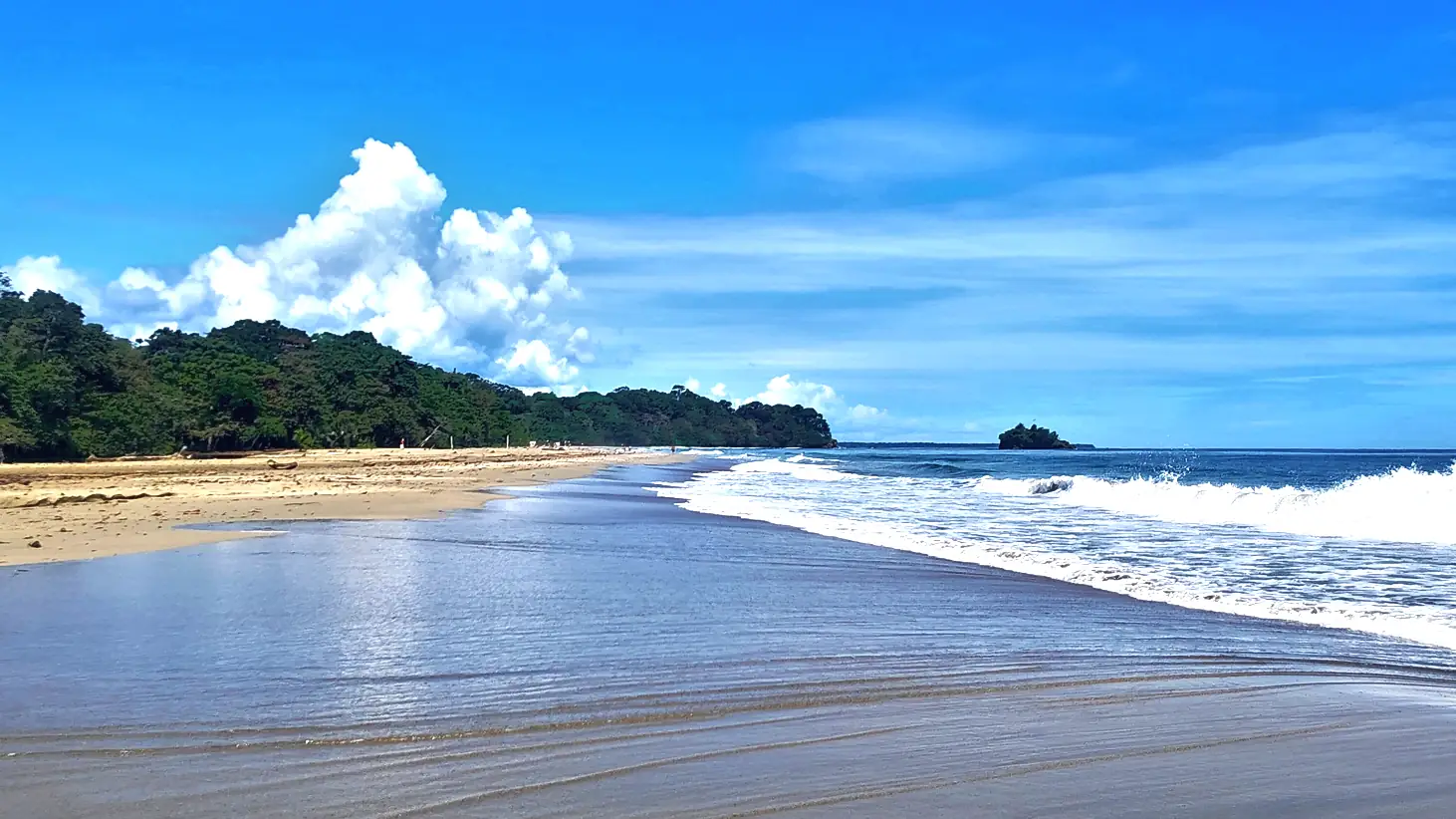 Surf along Playa Cocles
Compare the shores in the beaches guide.
After dark and on the roadAbout how you move around
The town is lively in the evening. The risks are mostly about how you get around. The stretch of road beyond Punta Uva toward Manzanillo is quiet, and there are occasional reports of roadside robberies on the quieter sections.
- Use a taxi or tuk-tuk at night and agree the fare first. Your guesthouse or restaurant can call one.
- If you cycle at dusk, use lights: the coast road is flat and easy, but it is dark.
- Keep the road past Punta Uva to daylight, and ask locally before cycling it.
- We would not walk dark beaches or back roads alone late at night.
Buses, bikes and taxis are in getting around Puerto Viejo.
HealthMosquitoes, sun and a doctor
Nothing exotic, but worth a check before you fly. This is general information, not medical advice.
- The US Centers for Disease Control and Prevention advises preventing mosquito bites, using repellent with 20 per cent or more DEET.
- CDC lists malaria as present in the provinces of Alajuela and Limón. Ask a travel clinic whether you need anything for the Caribbean coast, ideally a few weeks before you travel.
- CDC also reports a hepatitis A outbreak in Costa Rica (notice dated 18 September 2026), with most cases in San José province, and recommends the vaccine for unvaccinated travellers aged one year or older. Keep routine vaccines up to date.
- The sun is strong this close to the equator. In Cahuita National Park the tourism board asks visitors to bring biodegradable sunscreen and enough drinking water for the long trail.
If something goes wrong
Sources. Government of Canada, Costa Rica travel advice (updated 31 August 2026); El Observador, ICT and Cruz Roja lifeguard agreement (29 April 2023, renewed for four years); NOAA, rip currents; CDC, Costa Rica traveler health notes. Official advice changes, so check the current versions before you travel. No place is safe at every moment. Photographs are credited on Photography credits.